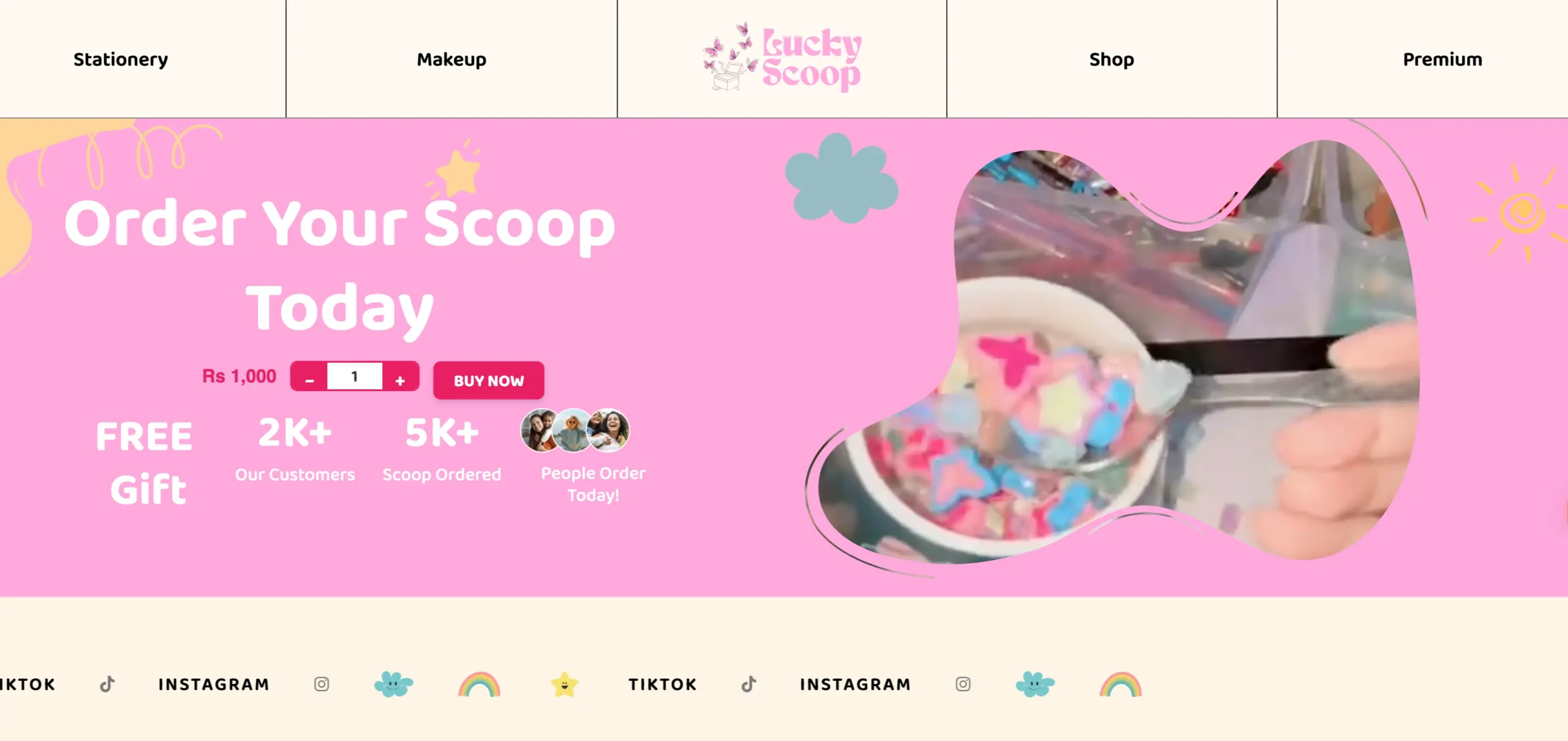

Across the world, a new form of retail is quietly gaining momentum — mystery-based commerce, often known as the “lucky scoop” model. Built on surprise, emotional engagement, and social sharing, this business concept is redefining how consumers interact with small online brands.
From Asia to Europe and North America, these businesses thrive not on traditional advertising, but on curiosity-driven purchasing and short-form video platforms that turn unboxing into entertainment.
What Is a Lucky Scoop Business?
At its core, the lucky scoop model offers customers a curated bundle of products whose exact contents are not fully revealed at the time of purchase. Instead, buyers are promised:
-
A minimum value
-
A themed experience
-
The excitement of surprise
This model taps into the psychology of discovery — a principle long used in gaming, collectibles, and subscription boxes — now adapted for social commerce.
Why This Model Works Globally
🎯 Emotional Buying Over Logical Buying
Unlike traditional e-commerce, lucky scoop purchases are driven by emotion rather than comparison. Customers buy for fun, gifting, and content creation, not just utility.
📱 Social Media as the Storefront
Platforms like TikTok, Instagram Reels, and YouTube Shorts act as:
-
Marketing channels
-
Sales funnels
-
Trust builders
In South Korea and Japan, similar surprise-box concepts are tied to pop culture and collectibles. In the United States, subscription mystery boxes dominate niches like beauty and lifestyle. In Europe, curated surprise gifting is growing among independent online sellers.
The Role of Content in Scaling These Businesses
Short-form video plays a crucial role in:
-
Demonstrating authenticity
-
Showing real packaging and reactions
-
Creating viral loops through unboxings
The visual nature of these products makes them naturally shareable, turning customers into marketers.
Product Sourcing: Global vs Local Balance
Successful scoop businesses typically use a hybrid sourcing strategy:
-
Imported trend items to maintain novelty
-
Locally sourced products to control costs and support communities
Many international brands are now partnering with independent creators and small workshops, incorporating handmade accessories, crafts, and limited-edition items. This adds uniqueness while strengthening brand values.
A Glimpse from Pakistan
In Pakistan, the model is beginning to take shape as well. One emerging example is Lucky Scoop Pakistan, which reflects how the concept adapts to local markets through affordability, social engagement, and community-based sourcing.
While still early compared to Western markets, Pakistan’s rapid adoption of short-form video suggests strong future potential for this business type.
Challenges in the Lucky Scoop Model
Despite its appeal, this model also faces challenges:
-
Managing customer expectations
-
Maintaining consistent perceived value
-
Avoiding product repetition
-
Scaling operations without losing authenticity
International brands that succeed long-term focus heavily on quality control, transparency, and content consistency.
The Future of Mystery-Based Commerce
As consumer attention spans shorten and content-driven shopping grows, mystery-based businesses are likely to expand further. With advancements in AI-driven personalization, future scoop models may offer:
-
Interest-based customization
-
Tiered surprise levels
-
Region-specific themes
This evolution could position lucky scoop commerce as a mainstream retail format rather than a novelty.
Final Thoughts
The lucky scoop business model is more than a trend — it’s a reflection of how modern consumers value experience over ownership. When executed well, it blends entertainment, commerce, and community into a single offering.
As seen in markets worldwide — and now emerging in places like Pakistan — mystery commerce proves that surprise, when combined with trust, can be a powerful business strategy.