

Introduction
The Association of Business Executives (ABE) has established itself as one of the world’s leading awarding bodies for business and management qualifications. For decades, thousands of students across the globe have chosen ABE qualifications as a flexible, internationally recognised pathway into higher education and professional advancement. Whether you are a school leaver exploring your options, a working professional seeking career progression, or an institution looking to offer accredited programmes, understanding how ABE examinations work and how to register is the essential first step.
Navigating any new qualification system can feel overwhelming, especially when it involves course selection, document submission, and understanding ABE exam fees. This comprehensive, step-by-step guide is designed to make the entire registration process clear, manageable, and stress-free. By the time you finish reading, you will know exactly what to expect at each stage — from researching your options to receiving your enrolment confirmation.
Understanding ABE Examinations
Before diving into the registration process, it is worth understanding what ABE examinations actually involve. ABE qualifications are vocational and academic awards focused primarily on business, management, human resource management, marketing, and related disciplines. They are widely recognised by universities and employers in over 35 countries.
Qualification Levels
ABE offers qualifications spanning several levels, aligned to national and international qualification frameworks:
- Level 3 (Certificate): An entry-level qualification ideal for students who have completed secondary education and are new to business studies.
- Level 4 (Diploma): Equivalent to the first year of a university degree, providing a solid foundation in business and management.
- Level 5 (Higher Diploma): Comparable to the second year of a degree programme, building advanced analytical and managerial skills.
- Level 6 (Graduate Diploma): The highest ABE level, equivalent to a full bachelor’s degree. Graduates are well-positioned to progress to postgraduate study.
Assessment Structure
ABE examinations are primarily written assessments, though some modules incorporate coursework and assignments. Exams are typically held twice a year (in June and December), allowing students to plan their studies around set windows. Understanding this timetable is critical because it directly affects your registration deadlines and preparation schedule.
Eligibility and Preparation Before Registration
Registering for ABE courses begins well before you fill in any forms. Confirming your eligibility and gathering the right materials early will save considerable time later.
Entry Requirements
- Level 3: Typically requires a minimum of two secondary school passes (e.g., O-Levels, GCSEs, or equivalent).
- Level 4 and above: Usually requires the completion of the previous ABE level or equivalent recognised qualifications.
- Mature students: ABE may consider relevant work experience in lieu of formal qualifications on a case-by-case basis.
Documents to Prepare
- Valid government-issued photo identification (national ID card or passport)
- Certified copies of your most recent academic certificates or transcripts
- A recent passport-sized photograph
- Proof of any prior ABE qualifications (if progressing to a higher level)
Having these documents organised and certified in advance prevents delays at any stage of the application process.
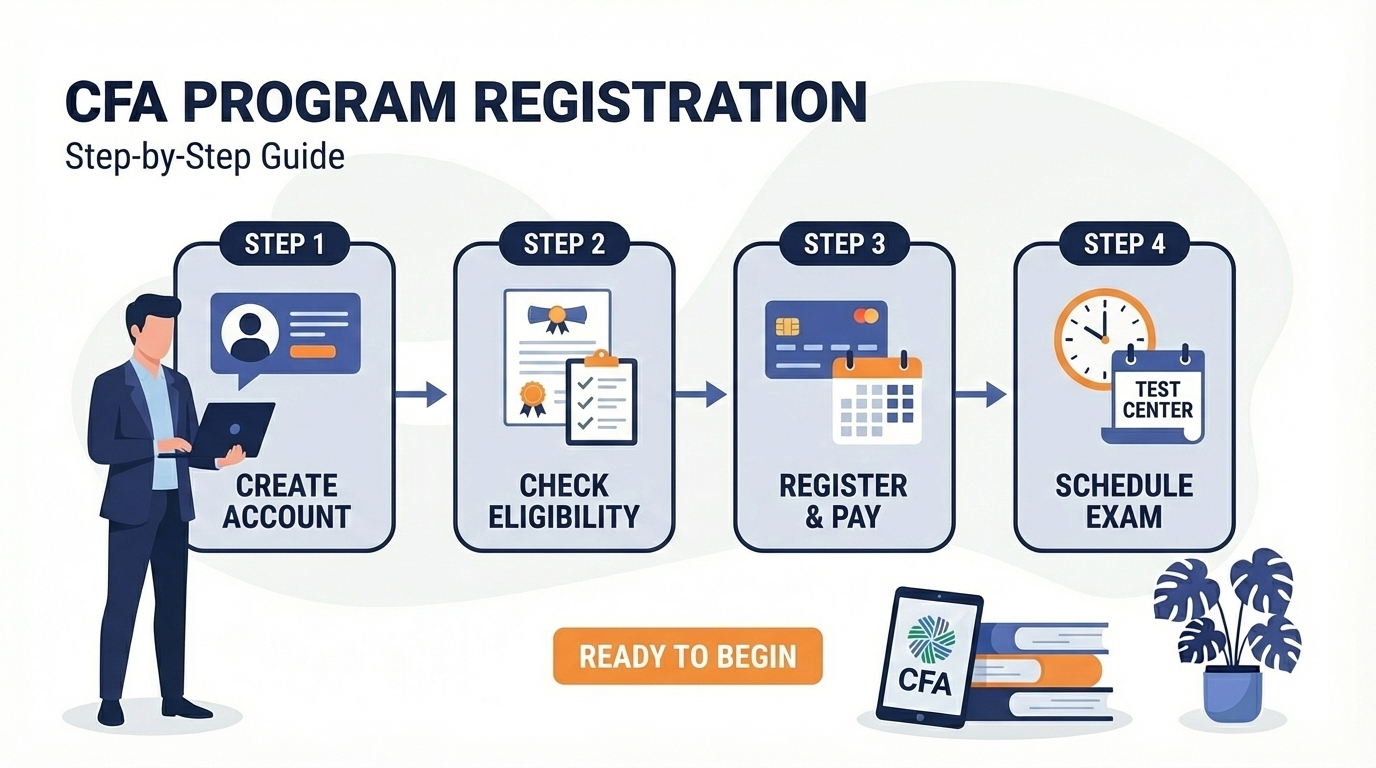
Step-by-Step Registration Process
The following steps outline the standard registration journey for students enrolling in ABE examinations through an accredited centre.
Step 1: Choose Your Course and Level
Begin by visiting the official ABE website (abeuk.com) or contacting an accredited ABE study centre near you. Browse the available qualifications and select the subject area and level that aligns with your career goals and current academic background. Popular streams include Business Management, Human Resource Management, Marketing, and Business Computing.
Step 2: Find an Accredited Study Centre
Students register for ABE examinations through an ABE-accredited study centre rather than directly through ABE in most cases. Use the centre finder tool on the ABE website to locate an approved institution in your region. When choosing a centre, consider factors such as tuition quality, location, available support services, and the total ABE exam fees they charge on top of ABE’s own registration costs.
Step 3: Complete Your Application Form
Your chosen study centre will provide you with an official ABE student registration form, either in paper or digital format. Fill in all sections accurately, including:
- Full legal name (as it appears on your ID)
- Date of birth
- Contact details and postal address
- Selected qualification level and subject modules
- Nationality and country of study
Errors on the registration form — especially in your name or date of birth — can cause significant problems when your certificates are issued. Review every field carefully before submission.
Step 4: Submit Your Documents
Alongside the completed application form, submit the supporting documents you prepared earlier. Most centres accept certified photocopies; however, some may require original documents for verification purposes. Ask your centre coordinator exactly what is needed to avoid resubmission delays.
Step 5: Pay the Registration Fees
Registration is not complete until payment has been confirmed. The fees covering ABE examinations consist of both ABE’s official charges and any additional tuition or administrative fees levied by your study centre (discussed in detail in the next section). Ensure you receive a payment receipt or confirmation and retain it for your records.
Step 6: Receive Your Student ID and Confirmation
After successful registration and payment, ABE will issue you a unique student registration number. This number is used for all future correspondence, examination entry, and result checking. Keep it in a safe place. You may also receive study materials, a timetable, and guidance notes from your study centre at this stage.
ABE Exam Fees Explained
One of the most frequently asked questions by prospective students concerns the cost of studying with ABE. Understanding the full picture of ABE exam fees ensures you budget accurately and avoid unexpected expenses.
Typical Fee Ranges
ABE exam fees vary depending on the qualification level, the number of modules you are entering, and the country in which you are registered. As a general guide, per-module examination fees are typically modest and affordable relative to comparable university programmes, though exact figures are subject to change and should be confirmed directly with ABE or your study centre.
| Fee Component | Notes | Who Pays |
| ABE Registration Fee | One-time fee payable to ABE | All new students |
| Per-Module Exam Fee | Charged per subject entered | Per examination sitting |
| Tuition Fee (Centre) | Set independently by each centre | All enrolled students |
| Study Materials | Textbooks, revision guides | Optional / bundled |
Factors Affecting ABE Exam Fees
Several factors can influence the total amount you will pay:
- Country of Study: ABE exam fees may differ by region due to local economic conditions and centre-set pricing.
- Number of Modules: Students typically sit multiple subjects per sitting; each module carries its own examination fee.
- Level of Qualification: Higher-level examinations may carry slightly higher per-unit costs.
- Late Entry Fees: Failing to register before the standard deadline can result in additional late registration charges.
Payment Methods and Deadlines
Once you understand what you owe, the next step is ensuring payment is made correctly and on time.
Accepted Payment Methods
Payment for ABE examinations is generally processed through your study centre, which then remits the official ABE portion of the fees. Commonly accepted payment methods include:
- Bank transfer or direct deposit to the centre’s account
- Cash payment at the study centre office
- Mobile money or digital payment platforms (varies by country)
- Cheque or bank draft payable to the centre (less common)
Always request and retain a stamped receipt or digital payment confirmation. This serves as proof of payment in the event of any administrative dispute.
The Importance of Meeting Deadlines
ABE examination series operate on strict calendars. Registration and examination entry deadlines are typically set several weeks before the actual exam sitting. Missing the standard deadline may not only result in late fees but could prevent you from sitting the examination altogether and force you to wait for the next series — a delay of up to six months.
Mark deadlines in your calendar the moment you confirm your registration. Set reminders at two weeks and one week before each key date.
Tips for Successful Registration
These practical tips will help you avoid common pitfalls and navigate the registration process smoothly:
- Start Early. Begin researching courses and gathering documents at least two months before the registration deadline. This is especially important if documents need to be certified or translated.
- Double-Check Your Personal Details. Discrepancies between your application form and your ID can invalidate your registration. Match your name, date of birth, and nationality exactly.
- Keep Copies of Everything. Retain copies of all submitted documents, payment receipts, and correspondence with your centre.
- Clarify Your Fee Breakdown. Ask your study centre for a full breakdown of all ABE exam fees and additional costs before committing. Transparency here prevents surprises later.
- Communicate with Your Centre. Build a relationship with your centre’s administrative team. They are your first point of contact for queries and can often expedite resolution of any issues.
- Verify Your Registration. Once you have submitted everything, follow up to confirm that your registration has been processed and that you appear on the candidate list for your chosen ABE examinations.
Common Challenges and Solutions
Even well-prepared students sometimes encounter obstacles during registration. Here are the most frequent issues and how to address them:
Missing or Incorrect Documents
Solution: Prepare a checklist of required documents before you begin and tick each item off as you gather it. If a certificate is lost, contact the issuing institution to request a certified copy as early as possible, as this process can take several weeks.
Payment Issues
Solution: If your payment is not reflected in your account or acknowledged by the centre, contact them immediately with your payment receipt. In cases of bank transfer delays, your bank can provide a transfer confirmation note.
Uncertainty About Module Selection
Solution: Speak with an academic advisor at your study centre who can help you map a realistic study plan based on your goals. Avoid over-registering for too many modules at once if you are working or have other commitments.
Late Receipt of Registration Confirmation
Solution: If you have not received your student number or entry confirmation within two weeks of submission, contact your centre to chase the update. Delays can occur during busy periods, but proactive follow-up ensures nothing is missed.
Frequently Asked Questions (FAQs)
How often are ABE examinations held?
ABE examinations are held twice per year, typically in June and December. Some centres may offer additional internal assessments or coursework-based components throughout the year, but the main written examination sessions follow this biannual schedule.
Can ABE exam fees be paid in instalments?
This depends on the policy of your individual study centre. Some centres do offer flexible payment plans for tuition, though ABE’s own registration and examination fees are generally due in full before deadlines. Always ask your centre coordinator directly about instalment options.
What happens if I fail an ABE examination?
Students who do not pass a module may resit the examination at the next available sitting. A retake fee, equivalent to the standard per-module examination fee, will apply. There is no limit on the number of times you may resit; however, planning a structured revision strategy is strongly advisable.
Are ABE qualifications recognised worldwide?
Yes. ABE qualifications are recognised by hundreds of universities and employers across Africa, Asia, the Middle East, and beyond. Many universities accept ABE diplomas for entry into the second or final year of an undergraduate programme, providing a valuable and cost-effective route to a full degree.
How do I check my ABE examination results?
Results for ABE examinations are typically released approximately eight to twelve weeks after the examination sitting and can be accessed online through the ABE student portal using your registration number. Your study centre will also be notified and can assist you in accessing and understanding your results.
Conclusion
Registering for ABE courses is a straightforward process when you approach it with the right information and preparation. By understanding the structure of ABE examinations, meeting entry requirements, following each step of the registration process carefully, and budgeting accurately for ABE exam fees, you give yourself the best possible start on your journey toward a globally recognised qualification.
The key principles to remember are simple: start early, stay organised, communicate with your study centre, and never underestimate the importance of deadlines. ABE qualifications have helped millions of students worldwide build rewarding careers and unlock doors to higher education — and with the guidance in this article, you are now well-equipped to take your first step forward.
Ready to begin? Visit the official ABE website or contact an accredited study centre near you today to find out more about available programmes, current ABE exam fees, and upcoming registration dates.