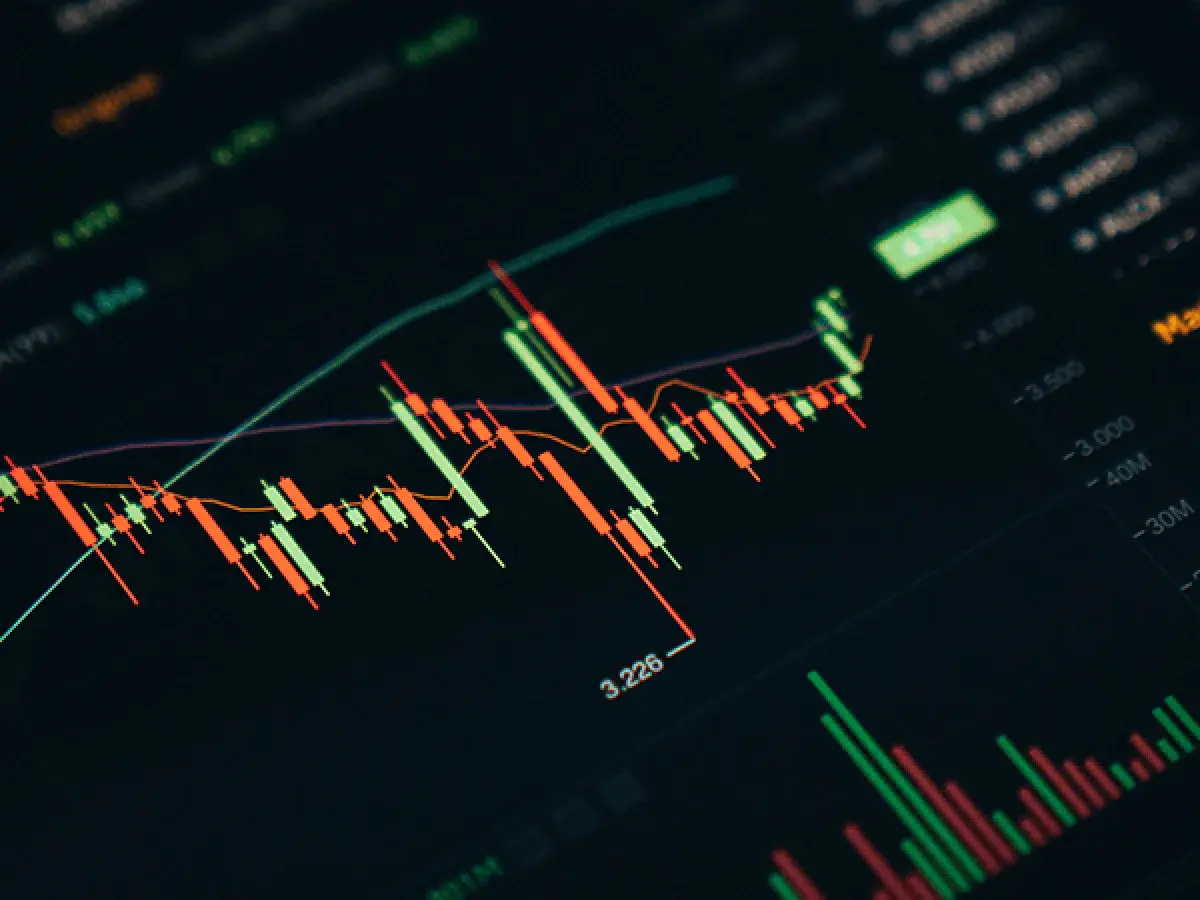

In today’s hyperconnected financial markets, traders are no longer satisfied with slow, traditional strategies that take years to yield results. The demand for fast and efficient profit generation has led to the rise of Fast Track Trading—a modern trading method focused on speed, accuracy, and strategic optimization to maximize returns in the shortest time possible.
Fast Track Trading isn’t about reckless risk-taking or gambling. Instead, it is a data-enhanced and systematically optimized approach to trading, built on high-information awareness, advanced tools, and disciplined decision-making processes. At its core, Fast Track Trading empowers traders to act quickly without being impulsive, thanks to structured strategies that eliminate emotional bias and leverage market timing.
Understanding the Concept of Fast Track Trading
Fast Track Trading refers to a set of techniques and trading systems designed to accelerate profit generation by:
-
Reducing decision time through predefined rules and automation
-
Leveraging rapid market analysis tools
-
Focusing on high-probability setups rather than long-term speculation
-
Managing risk to protect capital during fast-moving trades
These methods are used across various asset classes, including stocks, forex, commodities, crypto, ETFs, and futures. The core difference between traditional trading and Fast Track Trading lies in the time horizon. Traditional investing may require years of holding assets for compounding growth, while Fast Track Trading aims for returns within days, hours, or even minutes.
Key Components of Fast Track Trading
Successful Fast Track Trading relies on a combination of tools and principles that allow traders to act confidently and efficiently.
1. High-Probability Entry Signals
Rather than chasing every price movement, fast-track traders look for specific technical and fundamental triggers before entering a trade. These could include:
-
Breakouts from support/resistance levels
-
Moving average crossovers
-
Trend continuation patterns
-
Volume surges
-
Relevant news catalysts
The goal is to act only when the probability of profit is significantly higher than the probability of loss.
2. Risk Management Discipline
No fast-track strategy can survive without structured risk control. Effective traders:
-
Use stop-loss protection
-
Risk only a small portion of capital per trade
-
Avoid over-trading
-
Diversify across multiple assets when possible
The rule is simple: Protect capital first, grow capital second.
3. Speed-Optimized Tools and Platforms
Fast Track Trading often relies on:
-
Real-time market scanners
-
Automated alert systems
-
Algorithmic trading scripts
-
Copy-trading networks
-
AI-assisted prediction tools
These tools shorten the analysis time and improve the trader’s decision-making speed.
4. Backtested Trading Plans
Fast-track traders don’t rely on instinct. They trade with strategies that have historically been tested through:
-
Manual backtesting
-
Software-based simulation
-
Paper trading trials
Backtesting ensures a strategy has proven performance before live trading begins.
Popular Fast Track Trading Styles
Different traders adopt different fast-track methods depending on their goals, schedule, and risk tolerance.
Scalping
Ultra-short-term trading that targets small price movements within seconds or minutes. Scalpers may execute dozens to hundreds of trades per day.
Day Trading
Entering and closing all positions within the same day. Day traders avoid overnight exposure and focus on intraday trends.
Swing Trading
Holding positions for several days to weeks, capturing momentum during the strongest price swings.
News-Driven Trading
Capitalizing on rapid price fluctuations caused by economic reports, earnings announcements, political events, or unexpected global developments.
Regardless of method, the Fast Track principle remains the same: capturing quick opportunities with discipline and strategy.
The Benefits of Fast Track Trading
✔ Faster Growth Potential
Well-executed fast track trades can produce returns more quickly than traditional buy-and-hold investing.
✔ Increased Market Engagement
Fast-track traders remain consistently connected to market trends and economic activity.
✔ Adaptability Across Market Conditions
Whether markets are bullish, bearish, or sideways, short-term strategies can be adapted to profit in any environment.
✔ Scalable System
Once a strategy works, it can be scaled through automation, increased position size, or diversification.
Challenges and Misconceptions
While Fast Track Trading is powerful, it is not free of challenges.
❌ Misconception: Fast Track Trading = High Risk
Fast trading isn’t inherently risky—lack of discipline is risky. Structured strategies minimize risks.
❌ Misconception: Beginners Can Get Rich Fast
Though quick profits are possible, consistent education, practice, and emotional control are required to succeed.
❌ Challenge: Information Overload
Fast-moving markets generate constant data. Traders must filter noise and focus only on high-value signals.
Building a Fast Track Trading Plan (Step-by-Step)
-
Choose your market (stocks, crypto, forex, etc.)
-
Select a trading style (scalping, day trading, swing trading)
-
Define a clearly written strategy including entry, exit, stop-loss, and take-profit rules
-
Backtest your strategy using historical market data
-
Begin paper trading to refine your approach risk-free
-
Start small in live markets with controlled position sizing
-
Track performance using a trade journal
-
Optimize continuously based on results and changing market conditions
Success is not based on speed alone—it’s based on efficient systems.
Final Thoughts
Fast Track Trading represents the evolution of modern financial speculation—where traders combine data, discipline, and technology to accelerate success. It’s not about luck, shortcuts, or reckless risk-taking. It’s about smart execution, optimized strategies, and constant learning.
Whether you’re a beginner or an experienced trader, mastering Fast Track Trading requires commitment, practice, and emotional resilience. Those who approach it with respect and discipline can unlock opportunities far beyond the reach of traditional investing timelines.
Frequently Asked Questions (FAQs)
1. Is Fast Track Trading suitable for beginners?
Yes, beginners can learn Fast Track Trading, but they should start with education, paper trading, and strict risk management before using real money.
2. Can Fast Track Trading guarantee profits?
No trading approach can guarantee profits. Fast Track Trading improves probabilities, not certainties.
3. How much capital is needed to start?
There is no fixed minimum. Some brokers allow trading with as little as $50–$200, while others may require $500–$2,500. The focus should be on learning rather than starting big.
4. What tools are essential for Fast Track Trading?
Charting platforms, market scanners, risk management tools, fast execution brokers, and either manual or automated strategy systems.
5. How much time does Fast Track Trading require daily?
It depends on the style. Scalping requires constant monitoring, while swing trading may only require 30–60 minutes per day.
6. Can Fast Track Trading be automated?
Yes. Many traders use bots, AI signals, or algorithmic scripts to automate parts or all of their strategies.
7. What is the biggest mistake Fast Track Traders make?
Over-trading and ignoring risk management. Discipline determines long-term success.