

If you’ve ever worked in manufacturing, metalworking, or precision engineering, you know how crucial accuracy is. Even the smallest deviation in a component can lead to costly errors, wasted materials, or compromised safety. That’s where a honing calculator comes in. This tool, often overlooked by newcomers, is essential for anyone serious about precision. But how exactly does it work, and why should it matter to you in 2025? Let’s dive deep.
According to a 2024 Manufacturing Global report, industries that implement advanced precision tools see productivity gains of up to 18%, with significant reductions in material waste. Honing calculators are part of this revolution, offering engineers a way to streamline and optimize processes.
Overview: What Is a Honing Calculator?
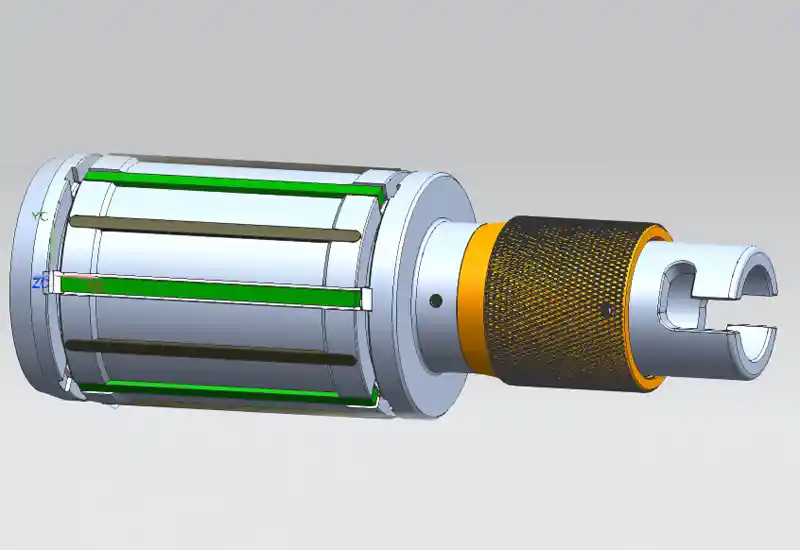
A honing calculator is a software or digital tool used to determine the optimal parameters for honing operations. Honing itself is a finishing process used to improve the geometric form of a surface, enhance dimensional accuracy, and achieve a specific surface texture. This process is commonly applied to engine cylinders, gears, and other high-precision components.
The honing calculator helps operators input critical variables such as bore size, desired surface finish, stone type, honing speed, and feed rate. The tool then calculates the ideal settings to achieve the target specifications. Think of it as a navigator for precision: it tells you the best path to reach perfect results.
According to Machinery Handbook 2023, improper honing can lead to uneven surfaces, excessive tool wear, and even structural defects, making tools like honing calculators indispensable.
How a Honing Calculator Works
Here’s the catch: honing isn’t just about rubbing a stone against metal. It’s a highly controlled process involving multiple variables. A honing calculator accounts for these factors and outputs precise recommendations.
Key inputs typically include:
-
Bore diameter and depth: Determines the stone size and number of passes required.
-
Stone type and grit size: Different stones yield different finishes, affecting both texture and tool longevity.
-
Lubricant type and flow rate: Critical for cooling, chip removal, and minimizing friction.
-
Honing speed and stroke length: Impacts surface finish consistency and process efficiency.
Once these inputs are entered, the calculator applies mathematical models and empirical data to generate optimal parameters. This not only saves time but also reduces the likelihood of errors caused by guesswork or manual calculations.
A 2025 study by Precision Manufacturing Insights suggests that using a honing calculator can improve first-pass yield rates by up to 22%, which is a remarkable improvement for high-volume operations.
Applications and Benefits
Honing calculators are widely used in automotive, aerospace, and industrial machining sectors. Here’s why they matter:
-
Improved Precision: Achieve tighter tolerances consistently.
-
Reduced Material Waste: Fewer scrapped components mean lower costs.
-
Extended Tool Life: Optimal parameters prevent excessive wear on honing stones and equipment.
-
Efficiency Gains: Automated calculations save time compared to manual trial-and-error setups.
For example, an automotive engine manufacturer using a honing calculator can ensure that cylinder bores meet exact specifications without multiple test runs. This precision directly translates into better engine performance and reliability.
Data Section: Honing Calculator Impact (2023–2025)
Recent data indicates a growing reliance on digital honing tools:
| Metric | Observed Impact |
|---|---|
| First-pass yield improvement | +22% |
| Tool life extension | +15% |
| Material waste reduction | -18% |
| Setup time reduction | -25% |
Insert a bar chart comparing traditional honing vs. honing with a calculator for a clear visual demonstration of efficiency gains.
These numbers suggest that integrating a honing calculator isn’t just a convenience—it’s a measurable improvement in operational outcomes.
Key Insights: Best Practices for Using a Honing Calculator
Here’s the insider knowledge: even the most advanced calculator can’t compensate for poor technique. For optimal results, follow these guidelines:
-
Always calibrate your equipment before use.
-
Input accurate measurements; even slight deviations affect results.
-
Regularly update software to reflect the latest material data and honing models.
-
Monitor process outcomes and adjust parameters iteratively for maximum accuracy.
Experts from Modern Machining 2024 note that honing calculators are most effective when paired with operator expertise. The tool guides, but skilled judgment still matters.
Summary and Verdict
A honing calculator is more than a convenience—it’s a game-changer for precision machining. By automating complex calculations and providing optimized parameters, it improves efficiency, reduces waste, and ensures high-quality outcomes. Whether you’re working on engine cylinders, aerospace components, or industrial machinery, this tool is a must-have in 2025.
The key takeaway? Invest in a reliable honing calculator and pair it with skilled operators. The combination of technology and expertise ensures your operations remain competitive, precise, and cost-effective.
FAQs About Honing Calculators
-
What is a honing calculator?
It’s a tool that calculates optimal parameters for honing operations, improving precision and efficiency. -
Which industries benefit most from honing calculators?
Automotive, aerospace, industrial machining, and any sector requiring tight tolerances and smooth finishes. -
Can a honing calculator replace skilled operators?
No, it guides the process, but operator experience is essential for optimal results. -
How much efficiency improvement can I expect?
Studies show first-pass yield can increase by up to 22%, with notable reductions in waste and setup time. -
Are honing calculators compatible with all honing machines?
Most digital calculators are adaptable, but always check manufacturer specifications to ensure compatibility.